

Editor’s Note:
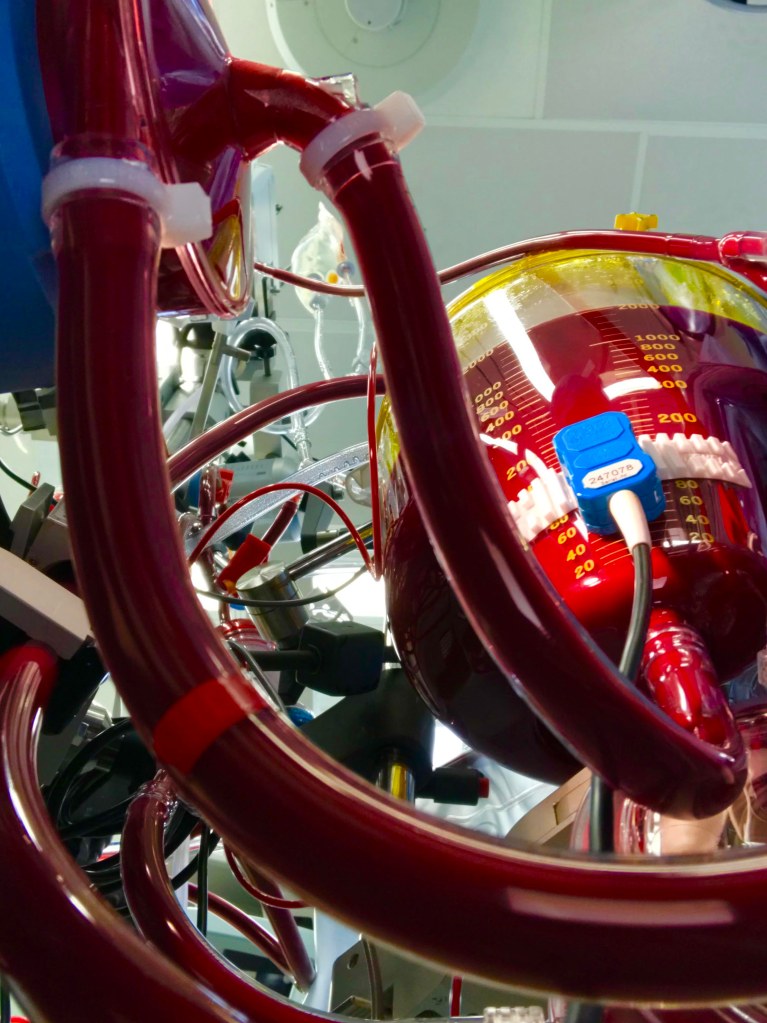
Perfusion is a dicey proposition when placing a patient on Cardiopulmonary Bypass.
A lot of moving parts, a lot of equipment, a lot of potential for failure. Going on bypass is a very critical moment, similar to when an airplane lifts off. A lot of decisions and observations interplay simultaneously to either establish that its a go- or a no-go. We have checklists and we triple check our setups to an infinite degree.
Bottom line? It all happens in seconds- so it’s very very quick.
The question is?
There is always something possible that we didn’t anticipate or prepare for.
We have all been there before. That OMG and WTF moment when we realize that something isn’t right- or we missed something before going on bypass. It happens to the best of us and worst of us.
What do we do with that discovery of either omission, carelessness, or haste? There are times where I have actually had too much time to prep for a case- and end up missing the glaringly obvious.
We always strive for “The Perfect 10”
“It’s uniquely exhilarating doing something so few can do. That pretty much describes my life as a perfusionist, putting people on cardiopulmonary bypass for open-heart surgery.
I think we are reminded of our human fallibility (the potential to err is in all of us) each day we put someone on a heart-lung machine to perform cardiopulmonary bypass. With so many steps and moving parts in the equation, the goal is to choreograph out a perfect ‘10’ every single time.
Of course, that doesn’t always happen, as unforeseen circumstances may come up, equipment may fail, and the totally unexpected ‘never thought that was going to happen’ moment rears its’ head.
So, the ‘10’ ends up being- not the perfect pump run, as much as it disengages the focus from clinical perfection and enunciates the perfect recovery from an adverse situation.
That’s truly when we are ‘perfusionists’. The ability to adapt to rapid change, think through a previously unencountered problem, and still keep your heart in your chest- is what makes us all so special. Anybody that’s been in the field of open-heart surgery for a period of time has been in the zone. That’s a cool place to be. But ALL of us, have hovered outside of it as well.”
What defines us in reality is when we clearly miss the mark, and something happens that we may or may not control as well as we wanted or hoped for. Or something scares us.
Fear creates chaos in the decision making process: Whether it is fear of your own skill set, fear of the surgeon, fear of failure, fear of making a lethal mistake, fear of being seen as too old, too slow, too incompetent, wrong gender, or too new. It all resonates in our lives as perfusionists at some point.
Every day we risk a patient’s life, our careers, our livelihoods- they are all on the line each and every clinical event. People truly don’t understand the nuances of what we do- because it is so dynamic. That is what makes the perfusion community amazing.
So what happens when (not IF) we have a bad case- or make a crucial error?
Well we recognize it, evaluate the lethality potential, and then make our decisions towards a corrective action to get back on course and resolve the issue hopefully for a good outcome. It’s odd… The word hope is not a definition we parallel ourselves to. We either DO or we Don’t.
Hope is not an option we have the latitude to resort to- at least for the most part. We assert ourselves to the point that we don’t depend on the ambiguous. Hope is not what a surgeon wants to hear if he asks “are we ok?’ and we respond “I hope so”.
“I hope so” during a bypass run is definitely something no-one wants to- or expects to ever hear.
The swift moments from recognition of a problem to defining a solution is what separates us from the pack. Nothing trains you for it, its not a cloak of invincibility that one person may seem to have and then it evaporates, it is simply how you assemble all the variables in play at the same time, and rearrange them to get out of whatever unexpected mess we find ourselves in.
That’s what we do. Quick reactions, quick assessments, and restructuring priorities.
Above all of those decisions that we are faced with, the biggest one is always how we communicate issues as they evolve- or DON’T.
Please take this survey on pumping a case with a reversed Oxygenator. It’s hypothetical until its NOT. The point of this survey is certainly not to generate controversy, more so- it is to bring us back to what brought us here to begin with. The essence of being able to do something that is so rare- it is a true privilege to be allowed to do.
None of us- as perfusionists ever had to recite the Hippocratic Oath- the first 3 words being “Do No Harm”. That is a heavy responsibility our surgeons bear when operating. Our mistakes lead to their explanations. We live and die as a team- and our patients are stereoisomers of that same reflection. Ultimately what makes us what we are is dedication to professional honesty, the willingness to share our failures as well as laude our successes. To do less, to get to a point where fear drives your decision making process, to be evasive or semi-transparent in how we relate to the rest of the team? Well that’s basically toxic and I’m certain has led to quite a few poor decisions. We are human after all 🙂
Pump Strong Guys !
___________________________
UPDATE 1:
I have thought about this for awhile- so total disclosure: This actually DID happen. The hypothetical is for HIPPA compliance. The CCP that pumped this case failed to disclose the fact that he pumped the entire case with the Oxy reversed. *Obviously there were mannifold sampling issues, and the recirc line was clearly deoxygenated. All subsequent samples needed to be drawn from the Radial arterial line by anesthesia.
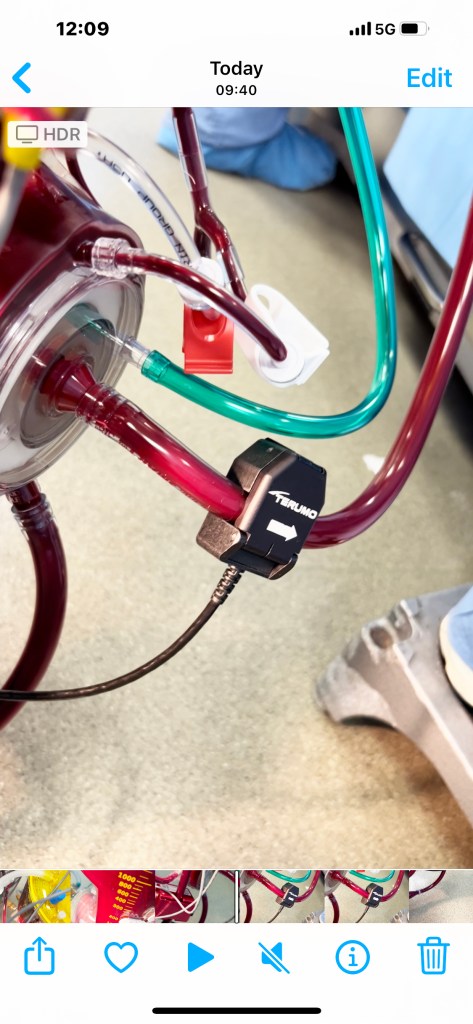
* Something to note: It clearly wasn’t that obvious. When trying to troubleshoot this situation- you are focused on Oxygenator failure. What you WANT TO SEE is arterialized blood. And that’s what was seen, Arterialized blood- Unfortunately from the wrong port.
The failed consideration? – was that it was reversed Q.
So a big hint– if you ever encounter that situation where you are sending arterialized blood to the patient, but the mannifold is Dark? Probably a reversed Q thing. It’s a once-in-a lifetime event.
UPDATE 2: FB
-
-
- Paul ConnollyHard to get your head around that one. Murphy’s Law makes cowards of us all. This would be very difficult to accomplish with an old bubble oxygenator. A membrane with a cardiotomy reservoir would also be difficult. A closed system would probably offer… See more
- Like
- Reply
- 3d
- Allan PalmerI’ve seen it done by an experienced perfusionist. They realised just before xc went on , informed team and asked for help . Assessed by all ,and as oxygenator was functioning fine and arterial filter was still in correct place after the oxy it was dec… See more
- Like
- Reply
- 6d
- Tanya BlodgetI don’t see how you can go on bypass with oxygenator lines reversed. This should have been identified while priming.
- Like
- Reply
- 1w
- ActiveFrank AprileAuthorI Agree
2
- Like
- Paul ConnollyHard to get your head around that one. Murphy’s Law makes cowards of us all. This would be very difficult to accomplish with an old bubble oxygenator. A membrane with a cardiotomy reservoir would also be difficult. A closed system would probably offer… See more
-
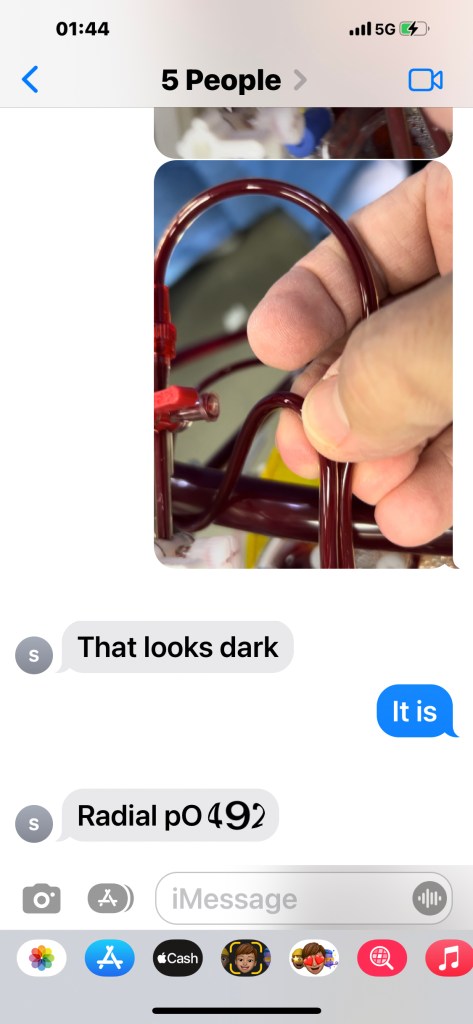
What made it worse? The CCP involved figured it out while on bypass.
After he came off and we kinduv debriefed, he and I talked- I made it very clear to him that he was about to cross a serious red line- and there were significant ethical and legal ramifications involved with failure to disclose. That was reiterated at least 4 times. I also stated that “if this was the answer to a Board (ABCP) question? You would fail and be disqualified.
His choice? Told the surgeon it was a sampling setup mistake on his part.
He has every opportunity to turn it around- but chose that.
I was fired 6 weeks later for disclosing these facts to the surgeon. I actually disclosed the information 2 weeks after the fact- but I should have done it the moment it was recognized and not 2 weeks later. That’s like pissing in the wind as an afterthought to cleanse your conscience.
It’s an odd situation to be in. To witness the total abandonment of the principals of medicine that we fought so hard for to earn. To expect full disclosure and to see it abandoned. It turns you into a witness without a voice. You are damned if you do- and damn yourself if you don’t. And at some point- when you realize that no-one made an effort to protect the patient? Then it will affect you. It should affect you.
But 2 weeks after the fact? It becomes a sledgehammer of self recrimination.
Bottom line? We will fail at times. BUT: Don’t let this happen to you!
There was a lot of corporate paranoia circulating. People got nervous, people were moved around- It didn’t feel right.
It was swept under the table.
It’s your choice to either man up and recognize that it’s a fellow human being on the table- or to shut down and preserve yourself.
I personally couldn’t live with it.
And to all the Corporate Execs reading this- looking for legal avenues? Reserve a seat for yourself in the same room with the audience that denied the Holocaust- You belong there.
The manufacturer also needs to be notified- because it has to be reported to the FDA.
Pretty sure THAT didn’t happen…
Please take the Survey – Click on the Image below


 The Tips of Spears...
11 responses to “Reversing Your Code of Conduct: A Dialogue on Pumping With Your Oxygenator in Reverse”
See Anonymous
LikeLike
First off, you should’ve figured this out during the priming of the circuit. It should not have been easy to prime. Once you are on, if the clamp is not on, you come off bypass and fix it!
LikeLike
As usual RL- If you actually took the time to read the article- you would realize it wasn’t my case- so don’t lecture me on a public forum with your misinformed commentary. I was the one that told the CCP to NOT let the surgeon XC until we were sure- Maybe re-read the post and put your little thoughts together- before making an ass of yourself in front of your peers.
LikeLike
And define your position? How would it have been hard to prime in reverse? We RAP all the time with flow going in reverse direction. So explain to me just exactly how you would identify that “it was more difficult to prime”? You are talking out of your ass dude- nothing you just said makes an ounce of sense. Enlighten me?
LikeLike
First off, you should’ve figured this out during the priming of the circuit. It should not have been easy to prime. Once you are on, if the clamp is not on, you come off bypass and fix it!
LikeLike
Richard Lawson- Chief Perfusionist at Ashland KY- is that the anonymous part ? Any reason you needed to copy and paste your reply twice?
LikeLike
Crystalloid cardioplegia, I hope, otherwise…not good
Why the FDA though, Frank, this is clearly operator error, could happen (probably has) with every oxygenator on the market? Good thought-provoking article
LikeLike
You nailed it Chris- Custodial- Thank you for your support- Starting a full time Chief job in 2 weeks- I miss u- I miss Chelsea-
LikeLike
Liva Nova is required by law to contact FDA- I didnt do it-
LikeLike
Powerfull article Frank
LikeLike
From you MVP? Thats a huge compliment. I respect it a lot 🙂
LikeLike